4WD Tractors Vs. 2WD Tractors: Which Is Easier to Maneuver?
Deciding between a 2WD and a 4WD tractor is actually a challenging question. After all, both options have their strengths and limitations.
When comparing the two, there is a critical factor: maneuverability. Fieldwork is very different from driving on a paved road. The ground may be rough, heavy implements are often attached at the rear, and crops can limit the available space. For the operator, responsive and predictable handling is essential.
So, how do 2WD and 4WD tractors compare in actual operation? Let’s look at their performance in different situations.
Table of Contents
- What Does Tractor Maneuverability Include?
- Turning in Tight Spaces: The Advantage of 2WD
- Wet and Soft Ground: 4WD Holds Its Line Better
- Driving on Slopes: Control Matters More Than Turning Radius
- Modern 4WD Tractors Are Improving Their Turning Performance
- The OXPLO Solution: Switchable 2WD and 4WD Modes
What Does Tractor Maneuverability Include?
Tractor maneuverability usually covers three areas:
- Turning: How easily it changes direction in tight spaces.
- Directional control: How well it stays on course.
- Stability: How it handles slopes and slippery ground.
Each drive system has its own strengths in these three areas.
Turning in Tight Spaces: The Advantage of 2WD
A 2WD tractor feels more agile in the following situations:
- Headland Turns: Row-crop work requires a U-turn at the end of every pass. Since the front wheels of a 2WD tractor do not deliver power, they generally have a larger steering angle. The resulting smaller turning radius shortens each headland turn and reduces idle time during headland turns.
- Around Barns and Sheds: There are tight passages between buildings on small and medium-sized farms, but a 2WD tractor can handle them well. It is lighter, and its simpler front axle requires less steering effort at low speeds. This gives it an advantage when maneuvering in confined areas.
- Narrow Crop Rows: This advantage is especially relevant in orchards and plantations, including coffee plantations, citrus orchards, and vineyards in Brazil. Row spacing may leave only enough room for the tractor to pass between the crops or tree canopies. A smaller turning radius reduces the risk of brushing against nearby branches when changing direction at the headland or adjusting the tractor’s position between rows.
Wet and Soft Ground: 4WD Holds Its Line Better
When traction is poor, the main handling concern shifts from turning agility to directional stability.
On wet or soft farmland, the rear wheels of a 2WD tractor are more likely to spin. The machine may drift sideways, reducing directional control. The operator then needs to correct the steering repeatedly.
Under the same conditions, all four wheels of a 4WD tractor contribute to propulsion and grip. Steering input translates more directly into the tractor’s actual movement, so the machine follows the chosen direction more steadily.
Driving on Slopes: Control Matters More Than Turning Radius
On a slope, the priority is to keep the tractor on course and prevent it from sliding out of control. A few extra seconds at the headland are minor compared with losing directional control on a slope.
When a loaded 2WD tractor climbs uneven ground, less weight rests on the front axle. The front tires lose grip, and steering response weakens. In a dangerous situation, the driver may turn the wheel while the tractor continues in the same direction.
This is where 4WD has a clear advantage. The driven front wheels improve directional control on the climb. On the way down, all four wheels work together during braking, so the tractor remains more stable. This benefit is evident in livestock farms in the hilly areas of southern Brazil, where 4WD tractors transport feed and clean livestock pens.
Modern 4WD Tractors Are Improving Their Turning Performance
Based on the comparison above, 2WD may seem like the more flexible option. However, one more factor deserves attention.
Earlier 4WD tractors needed to transmit power through the front axle. This restricted the steering angle, so tight turns required more space than with a 2WD tractor. Improvements in front axle and steering system design have gradually narrowed this difference.
Modern manufacturers improve 4WD turning performance in several ways:
- Increasing the maximum front-wheel steering angle to reduce the space needed for a turn;
- Redesigning the front axle to reduce restrictions on wheel movement;
- Refining the steering geometry to reduce tire scrubbing and front-wheel slip;
- Adding steering assistance systems to some higher-end models to reduce operator effort.
The OXPLO Solution: Switchable 2WD and 4WD Modes
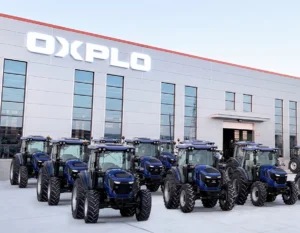
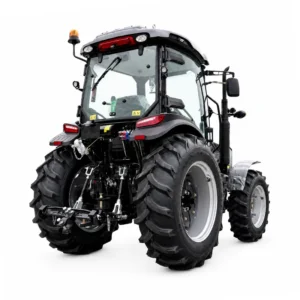
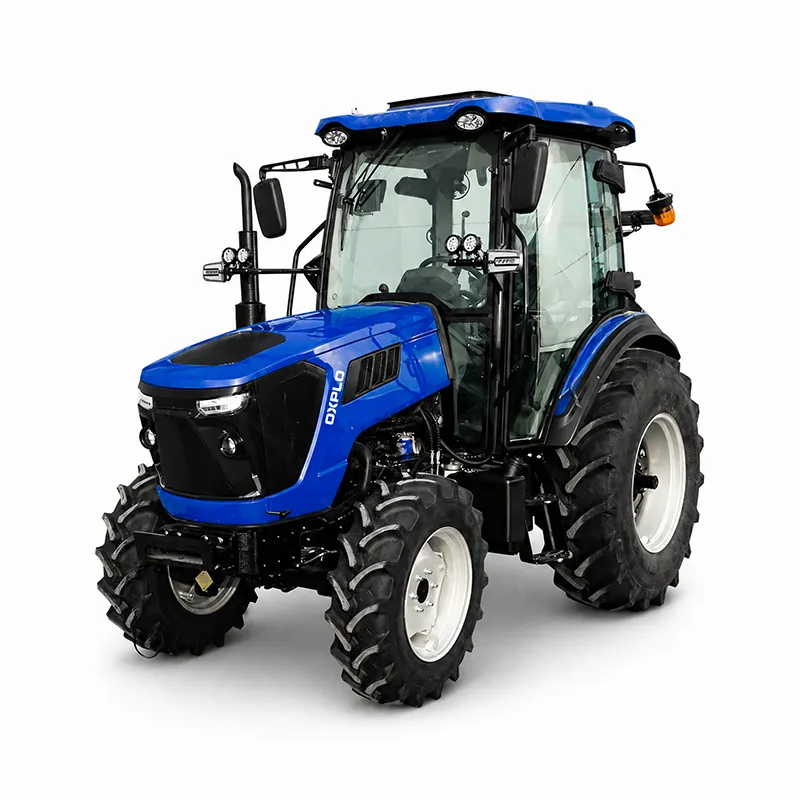
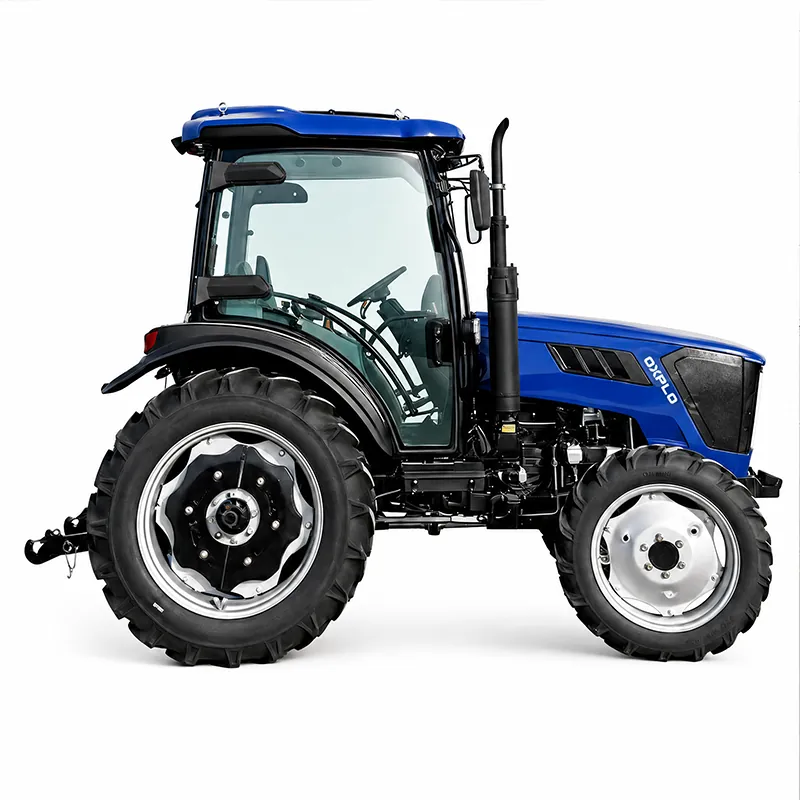
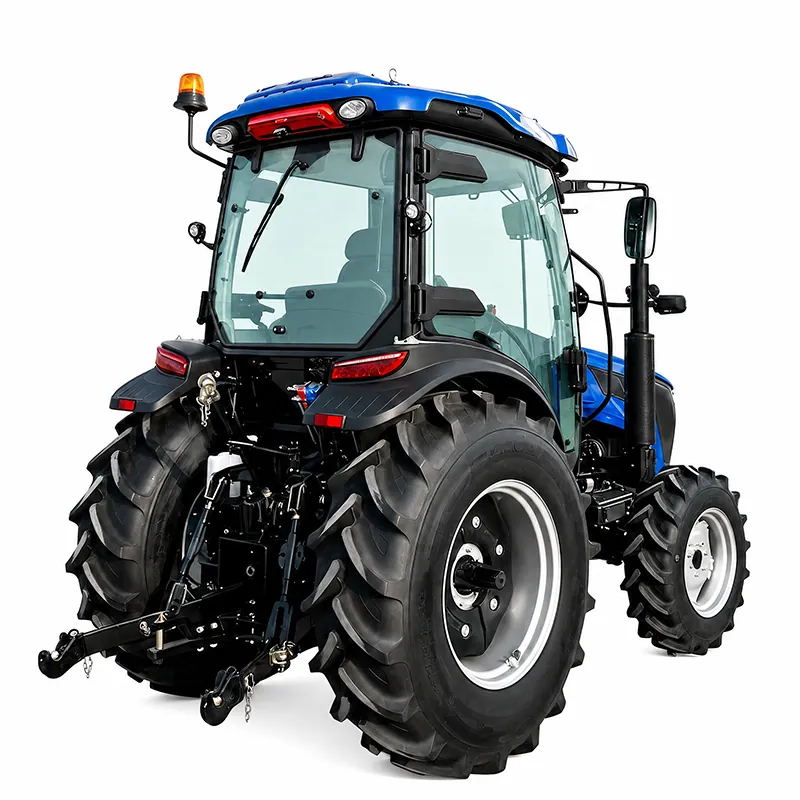
OXPLO 4WD tractors retain the traction benefits of four-wheel drive while offering selectable 2WD and 4WD modes. The operator can choose the drive mode according to the current working conditions, reducing the trade-off in turning performance when full traction is not required.
The recommended mode varies by operating environment:
| Working Condition | Drive Mode |
|---|---|
| Flat farmland | 2WD |
| Frequent headland turns | 2WD |
| Wet or soft fields | 4WD |
| Loose soil | 4WD |
| Sloping ground | 4WD |
| Transport on paved roads | 2WD |
If your farm includes several types of terrain, an OXPLO tractor with switchable 2WD and 4WD modes can balance both requirements.
Select 2WD for road transport and work on flat ground to reduce unnecessary consumption. Switch to 4WD in wet fields, loose soil or on slopes for better control and safer operation. One tractor can therefore cover both types of work.
Need Advice on Choosing the Right Model?
To learn more about the OXPLO tractor range or get further advice on model selection, contact the OXPLO team.